Last updated: August 10, 2026
- A $400 surprise can wreck a month.
- Decide what counts as an emergency while you are calm.
- What if I live in a place like Phoenix, Minneapolis, Atlanta, or rural Pennsylvania?
- That is exactly why an emergency fund exists.
A $400 surprise can wreck a month. That is exactly why an emergency fund exists.
An emergency fund is money you keep separate from everyday spending so you can handle a real surprise without borrowing, skipping rent, or draining your checking account. This emergency fund definition matters because the purpose of an emergency fund is simple: it helps cover unexpected, necessary costs and short income gaps. Think of it as plain cash for sudden, necessary expenses: a job loss, a car repair, a medical bill, a broken furnace, or an urgent trip home. It is not a spending account, and it is not the same thing as a savings goal for a vacation or a new phone.
The clean definition: what an emergency fund actually is
An emergency fund is liquid savings set aside for unplanned costs or income gaps. “Liquid” matters. Money locked in a retirement account, tied up in an investment that can fall in value, or slow to reach does not do this job well.
I picture it as a financial shock absorber. Life hits the budget. Hard. The fund’s job is to keep one surprise from turning into a chain reaction of debt, missed payments, or panic selling.
A good emergency fund has three traits:
- Separate from your checking account
- Easy to access quickly
- Reserved for true emergencies, not planned expenses
That last point trips people up. Holiday gifts, concert tickets, or a “great deal” on a laptop do not belong there. Once the money starts covering that stuff, it stops being protection and starts acting like a second wallet.
What counts as an emergency?
This is the question I hear most, because the line can blur fast.
A real emergency is usually something urgent, necessary, and unplanned. Should you not address it soon, your health, housing, work, or safety is at risk.
Common examples include:
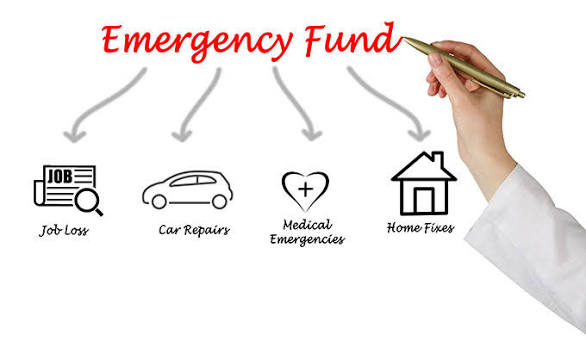
- A job loss or sudden drop in income
- An unexpected medical bill or prescription cost
- Car repairs that you need to get to work
- A broken water heater, furnace, roof leak, or electrical problem
- Emergency travel for a family situation
- A temporary gap after insurance does not cover the full loss
For example, the Federal Reserve has reported that many households would struggle to cover a $400 expense with cash or savings, which is one reason small emergencies can become big problems. Ask yourself: Would I still choose to spend this money if I had more time and fewer pressures? Should the answer be yes, it may be a want or a planned expense rather than an emergency.
Here is a simple way I separate them:
| Expense type | Usually covered by emergency fund? | Why |
|---|---|---|
| Job loss | Often yes | Can protect rent, food, utilities, insurance |
| Car repair needed for work | Often yes | Keeps income and daily life moving |
| Medical bill after an urgent visit | Usually yes | Unplanned and necessary |
| Home repair after a leak or furnace failure | Usually yes | Prevents bigger damage |
| Plane ticket for a family emergency | Often yes | Time-sensitive and necessary |
| Holiday shopping | No | Planned expense |
| New furniture | No | Can wait |
| Routine car maintenance | No | Predictable, so budget for it |
| Annual insurance premium | No | Better as a sinking fund |
The best emergency funds are boring on purpose. Should the reason feel dramatic but the cost be optional, it probably does not belong there. No drama. Just math.
What an emergency fund covers, and what it does not
People often ask for a rule that covers every case. I do not think there is one. A better test asks whether the expense is unexpected, essential, and hard to delay.
Usually covered
An emergency fund should cover expenses that protect your basic stability:
- Housing
- Food
- Utilities
- Transportation to work or school
- Essential medical needs
- Immediate repairs that prevent more damage
- Short-term income gaps
Usually not covered
I would not use emergency savings for costs you can predict and plan for, even if they feel annoying:
- Annual fees and renewals
- Car registration
- Vet checkups
- Back-to-school shopping
- Birthdays and holidays
- Home upgrades
- Cosmetic repairs
- Sale items you were already considering
The gray area
Some expenses sit in the middle. A root canal, for example, may be partly routine and partly urgent. A flight for a funeral may be necessary, but the cost may be lower when you have time to compare fares. A broken phone can be an emergency if it is your work tool, or just an inconvenience if it is not.
This is where judgment matters. I would not beat myself up for using emergency savings when life gets messy. But I would replace the money afterward so the fund is ready next time.
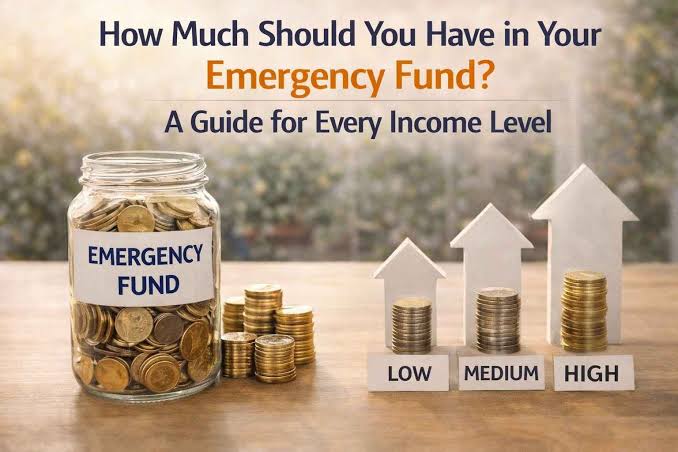
How much you should keep in an emergency fund

The right amount depends on your life, not a slogan.
Should your income be steady, your expenses be modest, and your job be secure, you may need less than someone who works freelance, supports children, rents in a high-cost area, or has a long commute with an older car. Should that sound like your situation, consider talking with a qualified financial professional about a target that fits your cash flow and risk level. The goal is not a magic number. It is breathing room.
A practical way to think about it:
- Starter fund: enough to cover a small emergency without using a credit card
- Basic fund: enough to cover several weeks of essential expenses
- Full fund: enough to handle a larger income interruption or major repair
If I were building one from scratch, I would start with a small target I could actually reach, then grow it. A tiny fund that exists beats a perfect fund that never gets built.
A lot of people get stuck because they think the goal must be huge before it matters. Backwards. A few hundred dollars can stop a flat tire, a copay, or a utility deposit from turning into debt. Later, a larger buffer adds more security.
Where to keep the money
An emergency fund should be safe and easy to reach, not exciting.
I would usually keep it in a high-yield savings account or another plain savings account separate from my checking account. Accessibility and preservation of principal matter more than return chasing. Put the money in stocks or a long-term investment, and it can lose value right when you need it most.
Good places for an emergency fund:
- A separate savings account at a bank or credit union
- A high-yield savings account if you want the money to earn something while it sits
- A money market account, if it offers easy access and no hidden hassle
Less suitable places:
- Individual stocks
- Long-term retirement accounts
- Real estate you cannot quickly sell
- Cash hidden at home in a size that makes you vulnerable to theft or loss
There is a trade-off here. Cash in savings will not grow fast, and inflation can erode buying power. That is the price of liquidity. Honestly, I still think it is worth paying for money you may need on short notice.
How to build one when money is already tight
This is where the advice gets real. Most people do not lack intelligence; they lack spare room.
I would build an emergency fund in small, repeatable steps:
- Pick a starter goal you can reach, even if it is modest.
- Automate transfers from checking on payday.
- Use windfalls selectively: tax refunds, bonuses, cash gifts, or side-income can give the fund a boost.
- Keep the money out of sight so it is less tempting to spend.
- Replace withdrawals quickly after the emergency passes.
Should you be living paycheck to paycheck, you may need to start with a very small buffer. That is not failure. It is strategy. A fund with a few hundred dollars can still make a real difference.
I would also look for one-time leaks in the budget. Not every emergency fund needs to be built only by “saving more.” Sometimes it grows faster when you cut one recurring cost, sell something unused, or direct a small part of every paycheck to it before the rest disappears.
What a generic article leaves out
A lot of emergency fund advice sounds neat but breaks down in real life.
The weak version says, “Save three to six months of expenses.” That can be helpful, but it is not a first step for everyone. Should you be starting with nothing, that target may feel so far away that you never begin.
The weak version also misses a key point: not every emergency has the same shape. A single renter in a low-expense city does not face the same risk profile as a parent with a long commute, a mortgage, a high deductible, and one salary supporting the household. The right fund depends on stability, dependents, fixed costs, and access to backup support.
Another thing many articles skip is the emotional side. People use emergency funds badly when they are ashamed, frightened, or under pressure. That is why I think it helps to write down your rules before a crisis hits. Decide what counts as an emergency while you are calm.
I also want to be honest about the limitation of emergency savings: it cannot solve every problem. When someone has no way to cover chronic shortfalls, a fund can buy time, but it will not fix a budget that is structurally upside down. In that case, debt counseling, income support, benefits, or a hard look at fixed costs may matter as much as the savings account itself. For financial decisions with legal, tax, or benefits consequences, it is wise to check with a qualified professional.
When an emergency fund is not enough
An emergency fund is useful, but it is not a substitute for insurance, a budget, or a stable income.
I would not use it to cover:
- Repeated monthly shortfalls
- Large uncovered losses that insurance should handle
- Long-term unemployment without any plan
- Business expenses for a side hustle unless you intentionally separate that money
- Ongoing medical or housing problems that need a broader solution
This is a clean distinction. Emergency savings are for the hit, not the whole war. Should the same kind of expense keep showing up, it may belong in your regular budget or in a separate sinking fund instead.
Quick answers to common questions
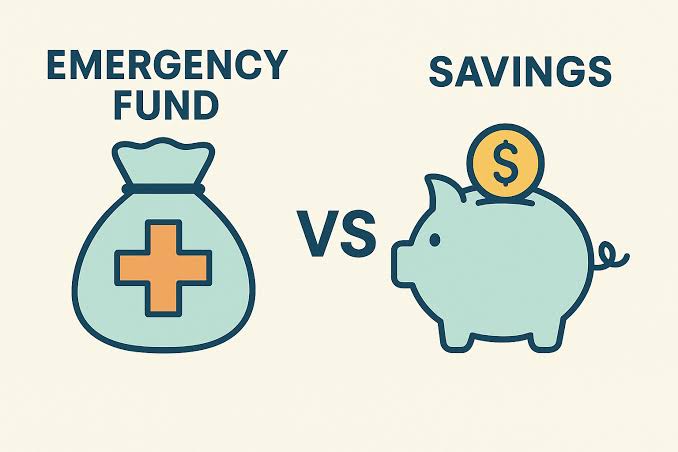
Is an emergency fund the same as savings?
Not exactly. All emergency funds are savings, but not all savings are emergency funds. A vacation fund, car replacement fund, and house down payment fund are savings too. The difference is purpose.
Should I pay off debt before building one?
Not always. Should you have no cash at all, I would usually want a small emergency buffer first so an unexpected bill does not send you deeper into debt. After that, the balance between saving and debt payoff depends on your interest rates, income stability, and risk.
Can I use a credit card instead?
A credit card can help in a pinch, but it is not the same thing. It is borrowed money that can turn a temporary problem into long-term interest payments. A credit card is a backup; an emergency fund is the first line of defense.
How often should I use it?
Only when the expense truly fits the purpose. Should you keep dipping into it, the fund is telling you something about your budget, your insurance, or your life setup.
What if I live in a place like Phoenix, Minneapolis, Atlanta, or rural Pennsylvania?
The principle stays the same, but the risks change. In a hot climate, car and cooling costs can matter more. In a cold climate, heating and winter travel may matter more. In rural areas, transportation repairs can be a bigger deal because alternatives are limited. Your emergency fund should reflect the place where you actually live, not an abstract rule.
The bottom line
An emergency fund is money reserved for real, unplanned, necessary expenses or income gaps. Its purpose is simple: keep one surprise from becoming debt, damage, or a financial spiral. It should be liquid, separate, and used with judgment.
If you want the shortest version, I would put it this way: an emergency fund buys time. Time to find a new job. Time to fix the car. Time to deal with a medical bill. Time to breathe before you make your next decision.
That is why I think it belongs in almost every financial plan, even if the first version is small.