Last updated: August 10, 2026
- In the emergency fund vs savings account: what’s difference?
- An emergency fund is money set aside for true surprises.
- The simplest way to think about it An emergency fund is a purpose.
- Emergency money should be harder to justify using.
Quick Answer: For most people, an emergency fund is 3 to 6 months of essential expenses kept for true surprises, while a savings account is simply the place where money can sit until you need it. In the emergency fund vs savings account: what’s difference? debate, the key is purpose, not the label on the account.
An emergency fund is money set aside for true surprises. A savings account is a place to keep money you do not plan to spend right away. The two can overlap, but they are not the same thing, and mixing them up often leaves people underprepared for shocks or parking every spare dollar in the wrong place.
I’m writing this as general financial information, not personal financial advice. Money rules, tax treatment, and account features vary by country and can change, so should your situation be tight, complex, or tied to benefits, debt, or taxes, consult a qualified financial adviser before making a move; for general guidance, see the CFPB on emergency funds and your local deposit-protection rules.
The simplest way to think about it
An emergency fund is a purpose.
A savings account is an account type.
That’s the cleanest distinction. You can keep an emergency fund in a savings account, but not every savings account balance is an emergency fund. A wedding fund, a car-repair fund, holiday money, and next month’s rent buffer might all sit in savings, yet none of them should be treated as “emergency money” unless that is the job you assigned to them; if your goals or tax position are unclear, consult a qualified financial professional and check your local bank and tax authority guidance.
I find it helpful to ask one question: What would I do if I needed this money tomorrow, and I did not want to regret using it? Were the answer “I would use it only for a real emergency,” then that balance belongs in the emergency fund. Were the answer “I may spend this on a planned goal,” then it is savings, but not emergency savings.
The difference matters because emergencies are not planned. A broken boiler, a medical bill, a job loss, or a major car repair can hit fast. Planned savings can be spent on purpose, on schedule. Emergency money should be harder to justify using. Short and sharp. That is the point.
What counts as an emergency fund

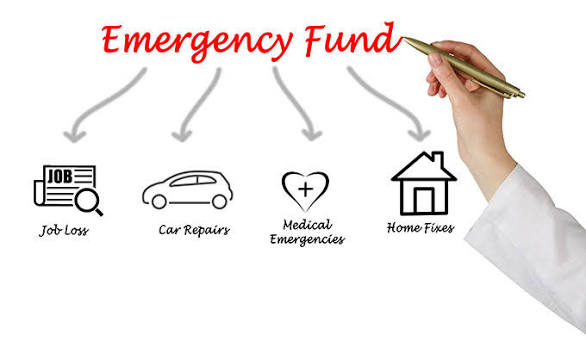
A real emergency fund is for necessary, urgent, and unexpected costs.
That usually means things like:
- job loss or reduced income
- emergency medical or dental costs
- urgent home repairs
- essential car repairs if you depend on the car
- travel only if the travel is truly necessary, not optional
What it does not mean is “anything I want but did not budget for.” A sale, a vacation, a phone upgrade, or a nicer apartment is not an emergency just because the timing feels inconvenient.
This is where many people go wrong. They keep a balance in savings and call it an emergency fund, but they are mentally ready to raid it for every non-urgent expense. Then the real emergency arrives and the money is gone.
I would define an emergency fund by its restraint. Should you reach it too easily, you may need a separate structure: one account for true emergencies, another for short-term goals. Some people even keep the emergency fund at a different bank so it is less tempting to dip into it. Honestly, that extra friction can help.
What a savings account actually does
A savings account is a deposit account designed to hold money you are not using right now.
Depending on the bank and the country, a savings account may offer:
- easier access than investments
- a place to separate spending money from reserves
- interest, though usually not high enough to treat it like an investment
- limits on how often you can move money out, depending on local rules and bank policy
The important point is that “savings account” describes the container, not the purpose. You can use it for an emergency fund, a vacation fund, a tax bill fund, a home repair fund, or a catch-all buffer.
That flexibility is useful, but it also creates blur. When every goal sits in one savings account, you may not know what the balance is for. Then when you look at the total, it feels larger than your real emergency protection actually is.
A savings account is a parking spot. An emergency fund is the reserved spot for financial trouble.
How they work together in real life
Most people do not need a complicated system. They need clear labels.
A simple setup often looks like this:
- checking account for bills and daily spending
- savings account for emergency money or short-term goals
- separate savings buckets, subaccounts, or a second account if needed
Should your bank let you create named buckets inside one savings account, that can help. If it does not, separate accounts can do the same job. The method matters less than the discipline: emergency money should be easy to identify and hard to confuse with spending money. For a step-by-step setup, start by listing monthly essentials, then choose a target amount, then label one account or bucket for emergencies and one for goals; the Consumer Financial Protection Bureau recommends beginning with a small starter buffer if a full fund feels impossible.
I would also separate the questions of access and temptation. Emergency money should be available fast enough to solve a problem, but not so exposed that it disappears into impulse spending. That balance is personal. Someone with unstable work may need quicker access than someone with steady income. Someone with a child, an older home, or an unreliable car may need a larger buffer than someone with few fixed obligations. No magic wand here.
The trade-offs: liquidity, discipline, and interest
People often ask which one is “better.” I do not think that is the right question. The real question is which one fits the job.
Emergency fund trade-offs
Pros:
– gives you a cushion during a crisis
– reduces the need to use credit for urgent expenses
– can lower stress because you know a setback will not wipe you out
Cons:
– money can sit unused for a long time
– it may earn little compared with other uses
– if the amount is too small, it creates false confidence
Savings account trade-offs
Pros:
– simple and familiar
– useful for many goals
– usually easier to access than long-term investments
– may earn some interest, depending on the account and market conditions
Cons:
– easy to blur the line between spending and saving
– often not enough structure by itself
– should the money be for a far-off goal, a plain savings account may be less suitable than another low-risk option, depending on your timeline and risk tolerance
A generic article might say, “Put your emergency fund in a high-yield savings account.” That can be reasonable in some places, but it is not universal. Account features, rates, access rules, and deposit protection differ by country and by bank. I would not treat one account label as automatically right for everyone; check the terms, fees, and deposit-protection scheme where you live before choosing.
How much belongs in each bucket
This is where a lot of articles get vague, so I’ll be direct without pretending there is one universal number.
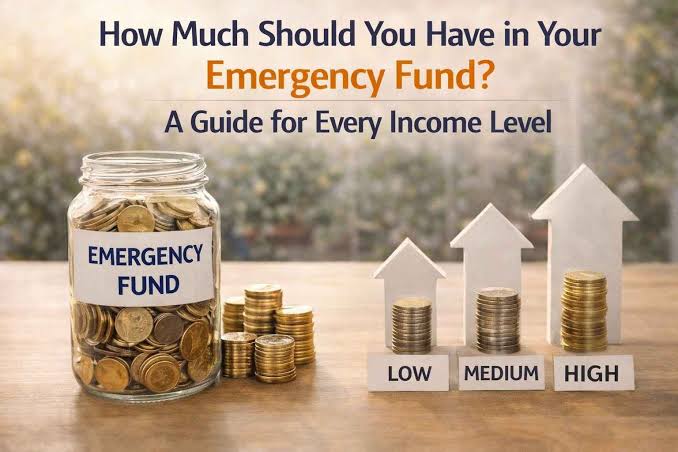
An emergency fund usually should cover essential expenses for a period that makes sense for your household. The right size depends on your income stability, dependents, debt, insurance coverage, and how hard it would be to replace lost income. A freelancer, commission worker, or sole earner may need a different buffer than someone with a predictable paycheck and low fixed costs.
A savings account for short-term goals is separate. That money is tied to a purpose and a date. When you know you will need it soon, keeping it in a cash account can make sense because the main goal is access, not growth.
A practical way to split money is:
- emergency fund: only for true financial shocks
- short-term savings: car replacement, rent deposit, holidays, annual bills
- longer-term goals: may need a different plan entirely, depending on horizon and risk
That last point is the one people skip. Should money not be needed for a long time, a plain savings account may be too conservative for the goal, but the right alternative depends on local rules and on how much uncertainty you can handle. A qualified adviser can help with that.
Common mistakes I see people make
1) Calling every savings balance an emergency fund
This is the biggest mistake. Should the money be already mentally spoken for, it is not a real emergency buffer.
2) Keeping the fund in an account that is too easy to drain
If the money sits right next to your debit card and your spending money, temptation wins more often than people expect. A little friction can help.
3) Putting the whole fund where access is too slow
An emergency fund is not meant to be locked away so tightly that you cannot use it when a real problem hits. The point is protection, not punishment.
4) Treating the fund like an investment
An emergency fund is there to be available, not to chase a return. Should the balance rise and fall with the market, that may add risk right where you want stability; a CFPB emergency-savings guide and local regulated-adviser guidance both stress keeping emergency money safe and liquid.
5) Not revisiting the amount after life changes
A new child, a job change, moving house, a second car, a mortgage, or a move into self-employment can all change how much cushion you need. The fund should change with your life.
Which one you should focus on first
Should your cash be limited, I would usually think in this order:
- cover immediate essentials
- build a starter emergency fund
- separate short-term savings goals
- review whether your account setup still makes sense
That said, there are exceptions. Should you have high-interest debt, unstable income, or major upcoming expenses, your priorities may shift. I am not telling you to pay down debt before saving or to save before paying debt, because the right answer depends on your rates, risk, and household pressure. A qualified adviser can help you sort that out.
What I can say is this: should you have no emergency buffer at all, every surprise becomes a crisis. Even a small fund can make a difference because it buys time. A 2024 Fed report found that 63% of adults could cover a $400 emergency with cash or its equivalent, which is useful context but not a target for everyone.
Local questions people ask about emergency savings
People often search for this topic when they are under pressure: a car has failed, rent is due, a layoff is possible, or a move is coming. In that moment, the most useful question is not “What is the best account?” It is “How do I keep this money available without confusing it with my spending money?”
That answer depends partly on where you live. Bank account names, deposit protection, instant transfer rules, and tax treatment vary by country and sometimes by state or province. Someone in a city with expensive rent and long commute times may need a faster-access buffer than someone in a smaller town with lower fixed costs. A household in London, Manchester, Birmingham, Glasgow, Cardiff, Belfast, or Dublin may face different monthly pressure than a household in a smaller market, even before you get to account features.
I cannot map one universal setup onto every place. Should you want the account structure to match your local rules, I would check the bank’s terms, the deposit protection scheme where you live, and any tax consequences before moving money around; should the paperwork or tax result be unclear, consult a professional.
FAQ
Is an emergency fund the same as a savings account?
No. An emergency fund is money reserved for unexpected, necessary expenses. A savings account is a type of account that can hold many kinds of savings, including an emergency fund.
Can I keep my emergency fund in a savings account?
Yes, in many cases that is exactly what people do. The key is that the money has a clear purpose and is easy enough to access in a real emergency without being so easy that you spend it casually.
Should I use one savings account for everything?
You can, but I do not think that is ideal for most people. Separate buckets or separate accounts make it easier to see what the money is for.
What if I need money right away?
That depends on your bank’s transfer timing and local banking rules. Should the situation be urgent, the fastest available option may matter more than the account label. If you are facing a real emergency, speak to the bank and, where needed, a qualified adviser as soon as you can.
Is a savings account enough on its own?
Sometimes, but not always. A savings account is only the container. Should the money not be clearly reserved for emergencies, it may not function like an emergency fund at all.
The bottom line
The difference is simple once you strip away the jargon: an emergency fund is money with a job, while a savings account is the place where that money may live.
Should you want the cleanest setup, think in buckets. Give emergency money a purpose, keep short-term goals separate, and do not let one balance pretend to be all things at once. That kind of clarity is often more useful than chasing the perfect account type.
And if your situation involves debt, benefits, taxes, or unstable income, I would not make a final decision from an article alone. A qualified adviser can help you fit the account choice to your own circumstances.