Last updated: August 10, 2026
- I would rather see $200 saved than an impossible promise to save $5,000.
- Start with $250 to $1,000 , set up automatic transfers on payday, and stash the money in a separate account so it is harder to spend.
- Use the “pause and pool” rule for non-urgent purchases If something is not truly urgent, wait 48 hours and put the money aside first.
- Quick answer: Want to know how to build an emergency fund fast on a low income?
Quick answer: Want to know how to build an emergency fund fast on a low income? Start with $250 to $1,000, set up automatic transfers on payday, and stash the money in a separate account so it is harder to spend. Honestly, that is usually the quickest realistic route when cash is tight.
Key facts
– Build a small starter emergency fund before trying to save three to six months of expenses.
– If one surprise bill would force you to borrow again, a starter fund comes first.
– The fastest savings usually comes from automatic transfers, cutting one leak, and using windfalls intentionally.
– Keep emergency savings separate from checking so it is less likely to disappear into daily spending.
– Use the fund for real emergencies only, then rebuild it after you use it.
When your income is tight, the move is not to wait for “extra money.” Pick a small target. Free up cash from one or two places. Then move it somewhere hard to touch before life swallows it. This guide on how to build an emergency fund fast on a low income starts with a starter fund of $500 to $1,000, then keeps going from there.
Start with the right target: small, fast, and real
A lot of advice assumes you can save three to six months of expenses right away. On a low income, that can feel impossible because it is. I would not make that your first goal.
I’d set the first target as a starter emergency fund:
- $250 if you are in true survival mode
- $500 if you have a little room
- $1,000 if you can build it without putting rent, food, or transit at risk
That money is for real emergencies only: a blown tire, a pharmacy bill, a broken phone you need for work, a copay, a power bill that would otherwise spiral. Not Black Friday. Not takeout. Not “I had a rough day.”
Why does this work? Psychology, mostly. A tiny fund is easier to finish, and finished goals get used. A half-built “someday” fund often turns into a guilt pile sitting in a checking account.
If you have debt, you may be wondering whether to save or attack balances first. My answer is plain: if one small emergency would force you to borrow again, build the starter fund first. After that, split your money between debt and bigger savings. If your income is unstable, that cushion matters even more. It’s a seatbelt, not a luxury.
Where the money comes from when there is no extra money
You do not build an emergency fund by waiting for life to become cheaper by magic. You do it by finding small, repeatable dollars and moving them before they vanish. That is the practical core of how to build an emergency fund fast on a low income.
Here are the fastest places I would look first.
1) Change the timing, not just the amount
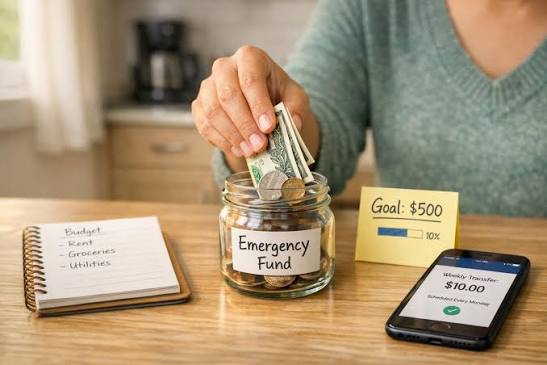
With predictable paychecks, move money the day you get paid. Even a tiny automatic transfer beats willpower. According to the Consumer Financial Protection Bureau, automatic savings can help people save consistently because the money is moved before it is spent.
Good starting points:
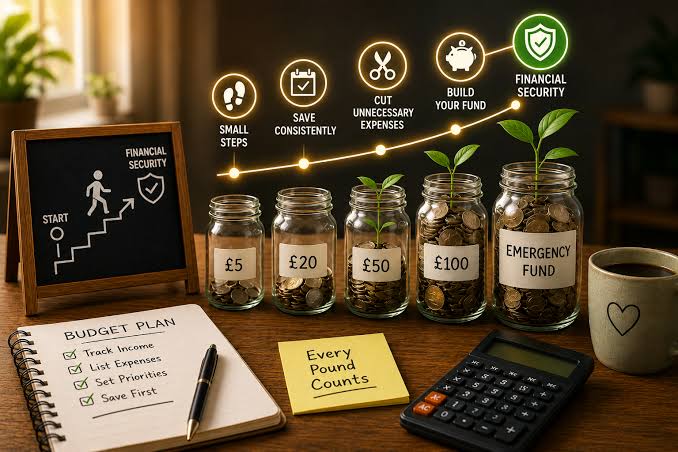
– $5 to $25 per paycheck if that is all you can spare
– a fixed percentage if your hours vary and you want something simple
– round-up transfers if your bank offers them, though these usually save slowly
Size matters less than timing. Really. The transfer needs to happen before spending starts.
2) Strip out one recurring leak
Most low-income budgets do not fail because of one giant mistake. They fail because of four or five tiny leaks.
I would check:
– unused subscriptions
– bank fees
– overdraft charges
– app memberships
– food delivery add-ons
– convenience-store purchases on the way home
– buying the same household item twice because there is no list
Canceling one small recurring charge can fund the beginning of an emergency fund. Not glamorous. Effective. The CFPB also recommends reviewing recurring charges and bank fees when you are trying to save more.
3) Use “found money” on purpose
Any money that is not part of your normal paycheck should have a job before it lands.
Examples:
– tax refund
– cash birthday money
– a small side gig payment
– reimbursement from an employer
– overtime you were not counting on
– a sold item from your home
I’d send most of that to savings immediately. Otherwise, it gets swallowed by catch-up spending. That math stops working fast.
4) Shrink one expense category for a short sprint
Fast savings usually needs a time limit. I like a 30-day sprint because it is short enough to survive.
Pick one category:
– groceries
– eating out
– transportation
– personal spending
– kids’ extras
– convenience purchases
Then cut it hard for one month, not forever. Pack lunches. Buy fewer ready-made foods. Combine errands. Skip the “small treat” purchases that quietly add up, and if you are unsure what you can safely cut, consider a nonprofit budget counselor or another qualified professional for guidance.
The trade-off is obvious: this feels stricter than normal budgeting. That’s the point. Short-term sacrifice is easier to handle than a permanent overhaul.
A low-income emergency fund plan that actually fits real life
Trying to save on a low income? I would not begin with a perfect budget. I’d start with triage. That keeps the emergency fund goal tied to what you actually need to protect.
Step 1: Protect the basics first
Before saving, make sure these are covered:
– rent or housing payment
– food
– utilities
– transportation to work
– child care if it keeps income coming in
– minimum debt payments if missing them would snowball
If saving means you cannot get to work or keep the lights on, the plan is too aggressive.
Step 2: Pick one number and one deadline
A fund without a target grows slowly. Choose a number that is just hard enough to matter.
Examples:
– $300 in 60 days
– $500 in 90 days
– $1,000 in 6 months
If you need help choosing, I would start with the smallest number that would let you handle a common surprise without borrowing.
Step 3: Divide the goal into tiny weekly chunks
A big savings goal feels abstract. Weekly pieces feel doable.
For example:
– $500 over 10 weeks means $50 each week
– $300 over 10 weeks means $30 a week
– $1,000 over 20 weeks means $50 per week
If those numbers are too high, extend the timeline. The point is to make the goal concrete enough that you can act on it. Otherwise, it floats around like fog.
Step 4: Put the money somewhere separate
Keep emergency savings out of the checking account you use every day. If it sits beside spending money, it will get spent.
A dedicated savings account is usually enough. If your bank makes transfers easy, use an account that is slightly annoying to access but not so hard that you avoid it in a true emergency.
I would not keep the fund in cash at home unless you have a specific reason and understand the risks. Cash can be lost, stolen, or spent too easily.
How to save fast without blowing up your budget
This is where generic advice often gets useless. “Make coffee at home” is not a savings plan if you already do. On a low income, fast savings usually comes from a few higher-value moves, which is why this part matters in how to build an emergency fund fast on a low income.
Cut the expensive convenience habits first
I would target the costs that charge you for being tired:
– takeout on work nights
– vending machines
– convenience-store drinks and snacks
– delivery fees
– last-minute rides instead of planned transit
– small replacement buys because no one had time to shop properly
These are not moral failures. They are pressure valves. But they are often the quickest money source when you need a starter fund.
Build a no-cook or low-cook backup list
If cooking from scratch every night is unrealistic, I would still make a cheaper backup plan:
– eggs and toast
– rice and beans
– pasta with sauce
– oatmeal
– frozen vegetables
– peanut butter sandwiches
– soup and bread
The goal is not perfection. It is avoiding the takeout spiral on the days you are exhausted.
Use the “pause and pool” rule for non-urgent purchases
If something is not truly urgent, wait 48 hours and put the money aside first. If you still want it and it still fits after the pause, fine. If not, the money stays in savings.
This works best for:
– clothes
– household extras
– gadgets
– decor
– impulse online orders
If the purchase is tied to work, health, or child care, do not treat it like a toy. Use judgment.
Sell things you do not use
This is one of the fastest ways to create a little cushion without reducing your weekly cash flow. Good candidates:
– electronics you have replaced
– duplicate small appliances
– clothing in good condition
– tools
– baby gear you no longer need
– furniture that is taking up space
I’d be honest about the trade-off here: selling takes time, and not everything sells quickly. But if you need cash fast, it can be one of the few realistic options.
Why a fast emergency fund helps
A starter fund is not just about the money itself. It can reduce stress, keep you from using high-cost credit for a small crisis, and buy you time to solve the real problem. Just as useful, it can make the next financial step easier because you are no longer starting from zero after every setback. That is the practical benefit of how to build an emergency fund fast on a low income.
Local cost realities that affect how fast you can save
Your savings pace depends on where you live. A person in a high-rent city with brutal transit costs and expensive groceries has a harder path than someone in a lower-cost area. So your emergency fund plan should be built around your local expenses, not a national average.
Here is a simple way I would think about it:
| Situation | What usually pushes savings hardest | Savings approach that fits |
|---|---|---|
| High-rent urban area | Housing, transit, parking, takeout | Smaller starter goal, aggressive cut to convenience spending |
| Car-dependent suburb | Gas, insurance, repairs, car maintenance | Build a car-repair buffer inside the emergency fund |
| Cold-climate area | Heating, winter gear, car wear | Save before winter; expect seasonal spikes |
| Hot-climate area | Electricity, cooling, higher utility bills | Set aside extra during lower-utility months |
| Area with unstable hours | Income swings | Save a percentage of each paycheck, not a fixed dollar amount |
If you live in an expensive metro area, a starter emergency fund may need to be modest at first because rent and transit already squeeze everything else. If you live somewhere suburban or rural, the emergency fund may need to cover car trouble sooner, because a breakdown can stop your income entirely.
The best emergency fund is the one matched to your real risks. For one person, that means a rent buffer. For another, it means a tire-and-tow buffer.
Where to keep it so you do not spend it
A fast emergency fund fails when the money is too easy to raid.
I would use these rules:
- keep it separate from checking
- give it a clear name in the app, like “Emergency Fund”
- do not attach it to a debit card if you can avoid that
- make transfers simple enough for emergencies, but not instant enough for impulse spending
If your bank charges fees or makes saving annoying, that matters. A small account that quietly eats your balance is not helping you.
One honest limitation: if your budget is already missing rent, food, or utilities, a savings account alone will not solve the problem. You may need emergency aid, utility assistance, food support, or a payment arrangement while you rebuild. Saving is useful, but it is not a substitute for keeping the lights on.
What to do when an emergency hits before the fund is full
This part matters because life rarely waits for your goal to finish.
When an emergency happens and you only have part of the fund:
1. Use the savings for the real emergency.
2. Avoid high-interest borrowing if you can.
3. Call the biller early and ask for a payment plan.
4. Replace the fund after the crisis, even slowly.
Do not feel like a failure if you use the money. That is what it is for. A starter emergency fund is not a trophy. It is a shock absorber.
If the emergency is medical, housing-related, or employment-related, I would also ask about local assistance programs, nonprofit aid, employer hardship help, and utility protections. For legal or tax consequences, it is smart to check with a qualified professional.
Questions people ask when they need emergency money now
Can I build an emergency fund if I live paycheck to paycheck?
Yes, but start smaller than you think. A tiny fund built in pieces is still a fund. I would rather see $200 saved than an impossible promise to save $5,000.
Is it better to save in cash or a bank account?
For most people, a separate savings account is safer and harder to spend. Cash is only useful if you need offline access or cannot open an account right away.
What if I keep having to use the fund?
That usually means the emergency fund is doing its job, but the fund is too small for your real life. Rebuild it, then increase the target if the same kind of problem keeps showing up.
Should I stop debt payments to save faster?
Usually no, unless missing payments would be a short-term necessity and you are choosing between that and keeping the basics covered. If debt is already unstable, I would get advice from a nonprofit credit counselor or another qualified financial professional.
Can I ask for same-day help if I have an emergency before payday?
Yes. Many banks, billers, employers, and local assistance groups can respond quickly if you ask early and clearly. The sooner you contact them, the better your odds of getting a workable solution.
The fastest plan I would use if I were starting from zero
If I had to build an emergency fund fast on a low income, I would do this:
- Set a starter goal of $250 to $1,000.
- Open a separate savings account if I did not already have one.
- Move a small amount on payday automatically.
- Cut one leak: subscriptions, fees, delivery, or convenience spending.
- Use any windfall or side income to push the balance up.
- Run a 30-day trim on one spending category.
- Keep the money separate and use it only for real emergencies.
That plan is not flashy. It does not promise comfort. It does, however, respect the reality of a tight budget.
If your income is low, speed comes from focus, not size. The first emergency fund is built by protecting a small amount over and over until it becomes real.