Last updated: August 10, 2026
- Key facts – A starter buffer of $500 to $1,000 can cover many small emergencies.
- – For irregular income, 3 months or more may be worth targeting after the first layer is restored.
- – A first rebuild target of 1 month of essentials is often more realistic than jumping straight to 3 to 6 months.
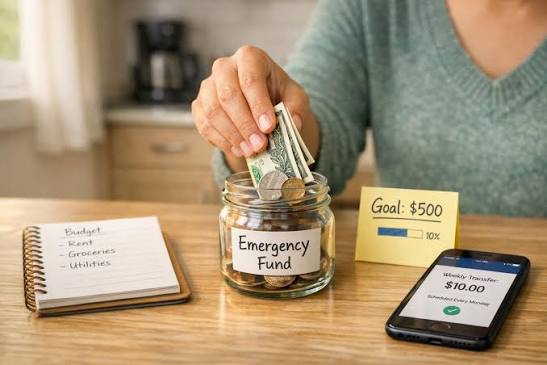
- For a lot of households, that single change can move $25 to $100 a pay period into savings without much friction.
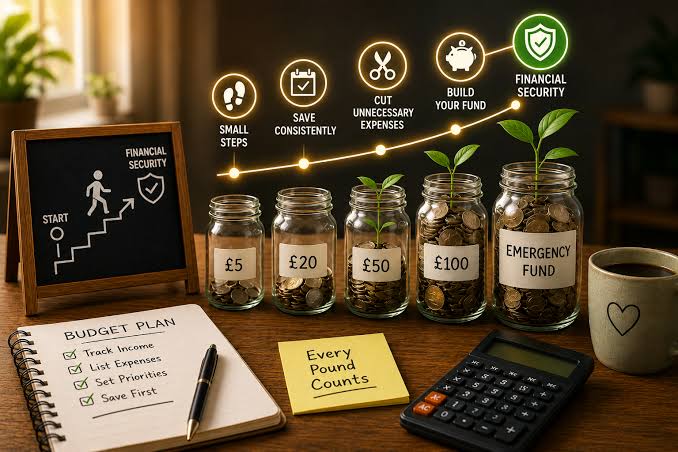
Quick Answer: To rebuild an emergency fund after using it, start with $500 to $1,000, then push it to 1 month of essentials, and after that work toward 3 months if your income is unstable. Not “save more” in a fuzzy way. That usually goes nowhere. Treat the fund like a bill, automate the transfer, and refill it in stages so one rough month does not knock the whole plan flat again. Live in Austin, Dallas, Houston, or a nearby suburb like Round Rock, Plano, Katy, or Cedar Park? Then this matters even more, because rent, car repairs, insurance deductibles, and summer utility spikes can hit hard and all at once.
Key facts
– A starter buffer of $500 to $1,000 can cover many small emergencies.
– A first rebuild target of 1 month of essentials is often more realistic than jumping straight to 3 to 6 months.
– For irregular income, 3 months or more may be worth targeting after the first layer is restored.
– Automation on payday reduces the chance the money gets spent.
– Keep emergency cash separate from sinking funds for car repairs, deductibles, or seasonal costs.
– If your finances are complex, consult a financial professional or nonprofit credit counselor before setting the target.
Start by deciding what “rebuild” means for your life, not a generic rule
I would not rebuild an emergency fund by chasing a random number I found online and calling it finished. The real target depends on what emptied the fund in the first place, and the Consumer Financial Protection Bureau recommends choosing savings goals based on your household’s actual budget and risks.
A car repair in San Antonio, a medical bill in Fort Worth, or a layoff in the Dallas-Fort Worth area? Then your next target should be a smaller first milestone you can hit quickly. That keeps the account from sitting empty for months. For many people in Texas, especially renters or single-income households, the smartest order is plain enough:
- Get to a small starter buffer.
- Then build to one month of essential expenses.
- Then move toward three months, or more if your income is irregular.
That sequence matters. “Three to six months” can sound responsible and still leave you with nothing while you climb toward it. According to the Federal Reserve’s 2024 survey, 63% of adults said they could cover a $400 emergency with cash or its equivalent, which also means a large share could not. If your work is volatile, you sell on commission, drive rideshare, or depend on seasonal work around Houston, Corpus Christi, or the Hill Country, I’d lean toward a larger buffer once the first layer is in place. Steady paycheck? More breathing room, sure. But it can still make sense to consult a financial professional about whether that is enough for your situation.
The real question is not “What is the ideal emergency fund?” Ask this instead: “What amount would keep me from reaching for a credit card the next time the water heater fails, the AC dies in July, or a paycheck is delayed?”
Rebuild in tiers so you get protection fast
A lot of generic advice misses the mark. It tells people to save a big number, then acts shocked when they stall. Tiers work better because they match how emergencies actually happen in places like San Antonio, where summer repairs are not optional and waiting can make the problem worse.
A simple tiered approach:
- Tier 1: enough for the most likely urgent expense in your life right now
- Tier 2: one month of bare-bones essentials
- Tier 3: two to three months of essentials
- Tier 4: a fuller cushion if your income is uneven or your family depends on one paycheck
If your emergency fund got used for a roof leak after a Gulf Coast storm, a tire blowout on I-35, or an ER copay, the first job is not perfection. It is enough cash so the next problem does not send you into debt. According to the Federal Reserve’s 2023 SHED report, an unexpected $400 expense is a real strain for many households, which is why a smaller first tier can matter so much.
I also like to keep the fund separate from short-term sinking funds. In Texas, where summer cooling costs, car maintenance, school expenses, and insurance deductibles can show up like clockwork, a sinking fund for predictable costs should not sit in the same bucket as true emergencies. Mix them, and the emergency fund gets raided for things that were never really emergencies. Messy.
Make the rebuild automatic, or it will keep losing to everything else
Waiting to save “whatever is left” at the end of the month usually leaves the emergency fund underfed. Rent in Austin, groceries in Houston, gas in the suburbs, and one surprise school fee can swallow the slack before you ever touch the savings account.
Set up an automatic transfer on payday. Even a modest amount works better than a promise. Tight cash flow? Start with what you can repeat without missing bills. A small transfer every pay period beats an ambitious one you cancel twice.
Here is the trade-off: automatic saving lowers the odds you’ll spend the money, but it can also create overdraft problems if you cut it too close. If your balance swings a lot, especially with variable work in places like Dallas, Arlington, or North Houston, schedule the transfer for the day after your paycheck clears, not before. I’d rather have it land a day later than bounce and create a second emergency.
And one more thing. If your employer lets you split direct deposit into multiple accounts, send part of it straight into savings. Money that never lands in checking is harder to spend on a dinner out, a new phone case, or a weekend trip to the coast. For a lot of households, that single change can move $25 to $100 a pay period into savings without much friction.
What to cut first when you are rebuilding on a tight budget
“Trim expenses” is the usual advice. Too vague. The better question is which cuts hurt least while freeing up the most cash.
Start with the easy pauses:
- subscriptions you barely use
- app-based conveniences that can wait
- premium grocery choices you can swap for cheaper staples
- extra takeout or delivery
- unused memberships
- nonessential shopping triggers, especially if they happen when you are stressed
Texas summers make this trickier because utility bills rise when the AC runs all day. I would not tell someone in Houston or San Antonio to cut cooling to the bone just to save faster. That is false economy. A short-term savings push should not create a bigger utility bill or a health problem. Some expenses are worth keeping because they protect the house, the car, or your ability to work.
Tempted to cut essentials too hard? Stop and ask: “Will this save me money, or will it create a new bill later?” A cheap oil change is not a luxury if it keeps your car alive. A working AC is not indulgence in a Texas summer. A home repair that prevents water damage is not the place to shave pennies, but if the repair is complex or safety-related, consult a licensed contractor or professional before choosing the cheapest option.
Use local cost reality to set the next target, not a national average
A generic article might tell you to save three months of expenses and stop there. That misses the local reality that changes how big an emergency can be.
Dallas-Fort Worth means long commutes, which also means more wear on tires, brakes, and gas budgets. Houston brings flooding risk and storm damage that can make home or auto surprises feel much less hypothetical. San Antonio and much of Central Texas put pressure on cooling systems and energy bills when the heat rises. Places like Plano, Frisco, Round Rock, or League City can still be expensive enough that a tiny emergency fund disappears quickly.
I’d size the fund around your local pain points:
- Car-dependent suburbs: lean higher if a car breakdown would stop you from earning money
- Older homes: lean higher if plumbing, roof, or HVAC issues are more likely
- Single-income households: lean higher because one missed paycheck hits harder
- Contract or commission work: lean higher because income swings can mimic emergencies
This is where a lot of people under-save. They think in abstract months of living expenses. I’d think in real-life disruptions: one transmission repair, one deductible, one week without pay, one storm-related home repair. If the first problem you face would cost more than your starter fund, keep rebuilding. No magic here.
A simple cost table for rebuilding in Texas
I cannot give you a universal price because every household is different, but I can give you a practical way to think about the rebuild amount in Austin, Dallas, Houston, San Antonio, and nearby suburbs.
| Rebuild stage | What it covers | Typical use case | Practical target |
|---|---|---|---|
| Starter buffer | Small urgent bill or copay | A flat tire, prescription, minor repair | A few hundred dollars |
| First real cushion | One essential expense cycle | Rent gap, utility spike, basic repair | About one month of essentials |
| Mid-level fund | Short disruption without debt | Temporary job loss, major car repair | Two to three months of essentials |
| Full cushion | Bigger interruption or multiple hits | Layoff plus repair, storm damage, family emergency | Three to six months or more |
I’m keeping those ranges qualitative on purpose. Your essentials in Austin are not the same as your essentials in Corpus Christi, and a homeowner in Cedar Park does not face the same risk as a renter in downtown Houston. The right number is the one that lets you absorb the next disruption without taking on expensive debt. For reference, the Bureau of Labor Statistics reports that housing, transportation, and food are the largest spending categories for many households, which is why those line items should drive the target.
Watch the red flags when you are trying to save faster
The biggest red flag is trying to rebuild so aggressively that you create the next emergency yourself.
Be wary of any plan that:
- leaves you unable to pay the next utility bill
- relies on skipping insurance or car maintenance
- assumes overtime will always be available
- counts on a tax refund or bonus that has not arrived
- drains every spare dollar and leaves no room for groceries or gas
This matters especially in Texas, where weather can change fast and a stranded car or failed AC can become urgent quickly. Saving too hard in one month can set up a reverse problem in the next. Like stepping on a rake.
Another red flag is using the same credit card every time the fund gets low. That can quietly replace one emergency with a larger one. If you are carrying revolving debt already, I’d treat rebuilding the emergency fund as a shield against adding more debt, not as a side project behind debt payoff, and I would consult a financial professional if you are unsure which goal should come first. The balance between those two goals is personal, and if your finances are tangled, a qualified financial professional can help you sort the order.
How to keep the fund from getting used up again
Rebuilding is easier if you change the setup that emptied the fund the first time.
I would make three moves:
- Keep the emergency fund in a separate savings account. If it sits in checking, it tends to disappear into normal spending.
- Create a replacement plan for the thing that drained it. If the emergency was a car repair, start a car-maintenance sinking fund. If it was a deductible, build a deductible fund.
- Review your insurance and household risks. A too-high deductible, weak auto coverage, or no savings for storm season can make a small problem expensive.
Houston may mean thinking harder about flooding and storm exposure. North Texas may mean preparing for vehicle repairs and commute-related wear. San Antonio may mean planning for heat-related home costs. Austin, where rents and living costs can move quickly, may mean keeping the first layer of savings very liquid.
I also think a lot of people need permission to rebuild slowly. If you used the emergency fund for a real emergency, that does not mean you failed. It means the fund did its job. Now refill it before the next shock lands.
Local FAQ: rebuilding an emergency fund in Austin, Dallas, Houston, and nearby suburbs
Can I rebuild my emergency fund while paying off debt?
Yes, and sometimes I think you should. If you have no cash cushion at all, even a small emergency can push you deeper into debt. That said, the right balance depends on your interest rates, monthly cash flow, and how unstable your expenses are. If your situation is complex, ask a financial professional which debt and savings order fits you.
Should I keep the fund in a high-yield savings account?
A separate savings account is usually the right idea because it keeps the money out of daily spending. I would prioritize accessibility and safety over chasing the highest return. If you use an account with restrictions or transfer delays, make sure you can still reach the money fast enough for a real emergency.
How fast should I rebuild it?
As fast as you can without creating a new problem. For a household in North Texas or along the Gulf Coast, that means fast enough to restore protection, but not so fast that you stop paying essential bills or fall behind on rent, utilities, or insurance.
Is this the kind of thing I can handle myself, or should I get help?
You can absolutely start on your own. If your income is irregular, your debt is already heavy, or your emergency fund was wiped out by a major life event, a financial planner or nonprofit credit counselor may help you build a better order of operations.
Can I get a same-day quote for local help?
If by “help” you mean emergency budgeting, most of the work is not about quotes at all. It is about deciding how much to redirect this pay period, where to store the fund, and how to keep it from being spent. If you need help with a related financial issue, ask for a consultation with a qualified professional rather than waiting for the perfect plan.
The short version is this: rebuild the fund in stages, automate the transfer, protect essentials, and size the target around your real life in Texas, not an abstract rule. If you are in Austin, Dallas, Houston, San Antonio, or a nearby suburb, your costs and risks are local, and your savings plan should be too.