Last updated: August 10, 2026
- Key facts: The usual emergency-fund target is 3 to 6 months of essential expenses.
- In the UK, the FSCS protects eligible deposits up to £85,000 per person, per authorised firm.
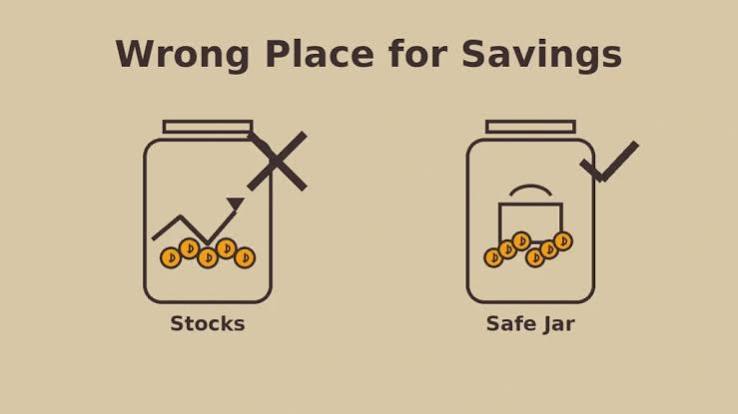
- Quick Answer: For most people, keep 3 to 6 months of essential expenses in cash or cash-like accounts, and do not invest that core in equities.
- If you have a very large buffer, you can keep the first 3 to 4 months fully liquid and consider other options for the rest.
Quick Answer: For most people, keep 3 to 6 months of essential expenses in cash or cash-like accounts, and do not invest that core in equities. If you have a very large buffer, you can keep the first 3 to 4 months fully liquid and consider other options for the rest.
No, for most people. And that answer still holds even when the spreadsheet tries to persuade you otherwise. The bigger point is messier, because “invest” can mean anything from a high-yield savings account to a stock portfolio — and those are very different animals.
This article is information, not financial advice. Your own situation — income stability, dependents, debt, country of residence — changes the calculus significantly. Consult a qualified financial adviser before making decisions about your personal finances.
Key facts: The usual emergency-fund target is 3 to 6 months of essential expenses. Many cash accounts are instant-access, while ETFs can take 1 to 3 business days to settle. In the UK, the FSCS protects eligible deposits up to £85,000 per person, per authorised firm.
What an Emergency Fund Is Actually For
Be clear about the job first. An emergency fund is not for growth. It is a brake pedal.
Lose your job, get hit with a medical bill, or face a car repair that cannot wait, and that money needs to show up in full, in cash, right away. Miss that test, and the fund has failed — even if it earned a little interest on the side.
Obvious? Sure. Yet when markets are climbing, people start treating idle cash like a personal insult. I get the irritation. Watching equities rise while money sits in a low-yield account feels wasteful. But that feeling is pointing at the wrong metric.
A typical guideline — and it does vary by country, profession, and personal circumstance — is three to six months of essential expenses. Freelancers, commission-based workers, and single-income households often keep more. The spread exists because risk and income stability differ from person to person, not because the idea is vague.
For more on the basic setup, see our guide to building an emergency fund and our overview of cash savings vs investing.
Why Investing It in Equities Is a Structural Mistake

Stocks, index funds, or anything equity-adjacent are a poor home for emergency cash. Not because of conservatism. Because timing wrecks the plan.
Emergencies do not check the calendar. The job loss that hurts most is often the one that lands during a recession — exactly when shares tend to drop hardest. Then you are forced to sell into weakness, turn a paper loss into a real one, and take the hit right when you need the money most. Brutal. That math stops working fast.
Retirement planners call this sequence risk, but the same logic applies here. The damage is not just the drop itself; it is missing the rebound because you sold while prices were depressed.
Liquidity matters too. Even assets that are technically easy to sell — an ETF you can unload today — still need settlement time. Depending on your country and broker, that may run one to three business days. In a true emergency, that delay can matter. Cash in a current or savings account is there immediately.
A similar issue shows up with cash reserves for a house deposit: accessible does not always mean available right now.
To be fair, there is one exception worth mentioning. If your emergency fund is very large relative to your essential expenses — say, twelve months when your job is stable and your dependents are few — it can make sense to keep the first three to four months fully liquid and invest the rest more aggressively. That is a design choice, not a betrayal of the rule.
Alternatives and the emergency fund vs. investing question
Usually, the real choice is not cash versus stocks. It is cash versus slightly better cash.
High-yield savings accounts, money market accounts, short-duration government bond funds, and — in the UK — cash ISAs all tend to pay better than a standard account while keeping the money accessible. A Bank of England rate move can shift cash rates within weeks, so today’s best option may be next quarter’s also-ran. The rates on these products change often, and they vary by country, so I will not pin down fixed figures here. Still, the gap between the worst and best available rates in most developed markets is not small. Over a year, on a sizeable emergency fund, it adds up.
There is a trade-off with money market funds and short-duration bond funds: they are not deposit-insured in the same way a bank savings account may be under your country’s protection scheme. They carry very low credit risk, but “very low” is not the same as “none.” For most people in most countries, that risk is acceptable for this purpose, yet you should know exactly what you own and what protection sits behind it.
If you are comparing options, our page on money market funds explains how they differ from bank deposits. You can also compare high-yield savings accounts with standard accounts before you move money.
The Tax Angle Nobody Mentions
Interest on savings is taxable income in most jurisdictions. So if your emergency fund earns meaningful interest and sits in a taxable account, the real return drops — sometimes a lot, depending on your marginal rate.
This is why tax-advantaged wrappers, where they exist and where the rules allow it, can be useful for the more liquid slice of your savings. In the UK, the cash ISA does exactly this. Elsewhere, similar structures exist, though the rules on withdrawals, contribution limits, and eligible account types differ and change. Check the current rules in your jurisdiction, because last year’s article may already be out of date.
What I would not do is give up liquidity for tax efficiency. An emergency fund locked into a fixed-term account just to earn a better rate or cut tax drag is not an emergency fund. It is savings wearing the wrong name tag.
For a broader comparison, see tax-free savings accounts.
Who Should Think About This Differently
Most of what I’ve said fits a salaried employee with stable income and ordinary expenses. Not everybody lives there.
If you are a high-income professional with a long, steady employment history in a resilient sector, a large emergency fund, and other liquid assets, you have more room to maneuver. The hard-line “keep it all in cash” rule matters less because your fallback options are broader. A shortfall in one account does not equal a real crisis.
But if you are self-employed, freelance, or tied to a cyclical industry, the picture flips. Your emergency fund should probably be larger than the standard guideline suggests, and the liquidity requirement gets stricter. Your income can drop sharply at the exact moments when a salaried worker would be fine, and that mismatch should shape how cautiously you hold the fund.
People carrying high-interest consumer debt sit in a different camp entirely. Paying down a credit card balance at a high interest rate often produces a better effective return than any savings account rate in the current market. Depending on your position, accelerating debt repayment before building a large liquid reserve is worth thinking through carefully — though, again, this is a structural conversation to have with an adviser who knows your full picture.
What a Sensible Setup Actually Looks Like in Practice
I can lay out the structure without telling you exactly what to hold.
The core of the emergency fund — roughly the three-to-four months of essential expenses you would need in a genuine job-loss or medical scenario — belongs in an account that is immediate, deposit-protected under your country’s scheme, and earns the best rate you can find within those constraints. Spending an hour comparing accounts is worthwhile. The rate differences are not tiny.
Past that core, if you have extra liquidity you want to keep reachable without parking it in low-yield cash, a money market fund or short-duration bond fund is a fair discussion to have. Ask three things: How quickly can you liquidate? What protections apply? What is your tax position on the interest or yield?
Equities, property funds, or anything with meaningful short-term price swings — I would not count that as part of the emergency fund, no matter how I labeled it in my head. A label does not erase risk. If you have to sell during a downturn to pay rent, the loss is real.
The Honest Bottom Line
The emergency fund question sounds like an optimization puzzle — how do I earn more on this money? — but it is really a resilience question: how do I make sure the cash is there when I need it most?
Those two frames lead in different directions. Optimization pushes you toward yield. Resilience pushes you toward liquidity and stability. Honestly, I side with resilience for the core fund, every time, because the moment the fund fails is usually the moment you can least afford it.
Still, there is a trade-off. Keeping far more than you need in the lowest-yield account, just because that is what you have always done, is not cautious — it is expensive. A middle path exists in most markets: earn a competitive rate while staying fully liquid and protected.
So the real question is not whether to expose your emergency fund to market risk. It is whether you are getting a fair return on cash without giving up the one job that money has to do: be there.