Last updated: August 10, 2026
- Should your income be unstable or your expenses change often, I’d review it every 3 to 6 months instead.
- A how often should you review your emergency fund check is really a monthly-expenses check in disguise.
- It’s about how long it might realistically take to replace income if the worst happens.
- They can alter how much cash cushion you actually need.
I’m Maya Chen, a personal finance writer who has spent years covering savings habits, cash management, and household budgeting. Here’s the blunt answer: review your emergency fund at least once a year, and sooner any time your life or expenses shift in a meaningful way. Quick Answer: for most households, the right emergency fund review schedule is once a year; when income is variable or expenses change often, review it every 3 to 6 months.
A savings account can sit untouched for ages, then suddenly look too small after one move, one job switch, or one new bill. That happens a lot. Should your emergency fund be parked in a savings account and you only revisit it when you panic, that’s usually too late. A good emergency fund is not a number you set once and forget. It should move with your rent, your insurance, your family size, your job, and your risk level. The best how often should you review your emergency fund rule is simple: check it on a schedule, not only in a crisis.
The simple rule I’d use
Want the cleanest version? Use this:
- Annual review for most people
- Every 3 to 6 months when your income, housing, or family situation is changing
- Immediately after a major event that changes your monthly spending or your risk of losing income
Because emergency savings are built around monthly expenses, and monthly expenses do not sit still. Rent climbs. Insurance premiums shift. A new car can add a payment and maintenance costs. A remote job can cut commuting costs, while a commute-heavy job can add them back. A how often should you review your emergency fund check is really a monthly-expenses check in disguise. That math stops working fast.
A generic article often stops at “three to six months of expenses,” but that misses the real question: three to six months of which expenses, and based on what version of your life? This is what the review is for.
What should trigger an earlier review
I would not wait for your annual calendar reminder if any of these happen:
- You change jobs or your income becomes less predictable
- You move, especially if rent or utilities change
- You get married, divorced, or start living with someone
- You have a child or add another dependent
- You buy a home and take on repair costs or a mortgage
- You finish a debt payoff and free up cash flow
- Your health situation changes
- Your car gets older and repairs become more likely
- You start freelancing, commission work, or seasonal work
- You use the fund for a real emergency and need to rebuild it
The point is not to micromanage your savings. It’s to make sure your emergency fund still matches the job it has to do. A fund sized for a stable salaried worker can be too small for a freelancer. A fund built for a renter can be too small for a new homeowner. And a fund that made sense before childcare may be miles off after it.
What I’d check during a review
When I review an emergency fund, I’m not just looking at the balance. I’m checking five things.
1. Has your baseline monthly spending changed?
This is the most important question.
I would list the expenses that truly keep life running:
- Housing
- Utilities
- Groceries
- Transportation
- Insurance
- Minimum debt payments
- Childcare
- Prescriptions and basic medical costs
Then I’d compare that number to the one I used last time I sized the fund.
A common mistake is to use a vague “monthly expenses” number that includes things like travel, gifts, subscriptions, and discretionary shopping. Those costs matter, but they are not the same as survival expenses. Should your emergency fund be too small because you padded the number with nonessentials, you may feel safer than you are. Honestly, that’s a trap.
2. Is your job risk higher or lower?
Should your income be more secure than it used to be, consult a professional if you are considering keeping less cash idle. When your income is less stable, you may need more. The CFPB says emergency savings should be based on your monthly expenses and personal situation, and the Consumer Financial Protection Bureau also notes that job and income changes can affect how much you should keep available. See the CFPB’s emergency savings guidance: https://www.consumerfinance.gov/consumer-tools/savings-and-budgeting/goal-setting/how-do-i-build-an-emergency-fund/
Examples:
- A salaried employee with a strong employment history may need less than a freelancer with variable clients.
- A dual-income household may need less than a single-income household, but only if both incomes are stable.
- Someone in a shrinking field may want a larger buffer than someone with highly transferable skills.
I’d be careful here: this is not about optimism. It’s about how long it might realistically take to replace income if the worst happens.
3. Is the money easy to access?
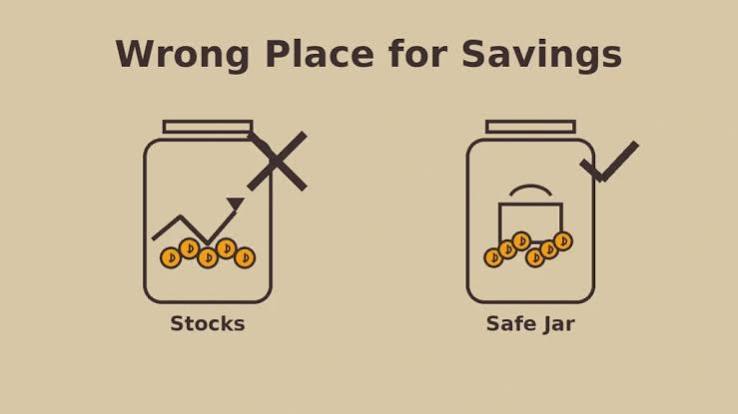
An emergency fund should be liquid. That means I can get to it quickly without selling investments in a bad market or waiting on penalties.
When part of your emergency fund is sitting in:
- stocks,
- long-term bonds,
- retirement accounts,
- or a certificate of deposit with a long lockup,
then I would not count all of it as true emergency cash.
A generic guide may tell you to “save more,” but the more useful question is whether the money is reachable when the car dies or the roof leaks. If not, it does not fully serve the purpose. Simple as that.
4. Has inflation changed the target?
Even without a life event, ordinary costs can rise. A fund that covered six months of bills a few years ago may not cover six months now if rent, food, insurance, or childcare have climbed.
I would not obsess over tiny price changes. But when your major fixed expenses have moved noticeably, I’d refresh the target.
5. Did you use the fund?
Should you have to tap the fund, the review should happen right away.
That review has two jobs:
- Decide whether the expense was truly an emergency.
- Rebuild the balance to the level you want.
Many people make the mistake of celebrating when they “have” an emergency fund, then leaving it depleted after an actual emergency. That leaves them vulnerable to the next problem.
A practical review schedule that works
Here is the schedule I would actually recommend.
Review once a year if your life is stable
If your income is steady, your housing hasn’t changed, and no one depends on you in a new way, once a year is enough for most people.
I’d pick a fixed time that is easy to remember:
– tax season,
– the start of a new year,
– your birthday,
– or the same month you review insurance and retirement contributions.
The date matters less than the habit. A sticky note on the fridge would do the job.
Review every 3 to 6 months if your life is in motion
I’d move to a faster schedule if any of these are true:
– variable income
– frequent job changes
– recent move
– newborn or new dependent
– ongoing medical costs
– self-employment
– major debt payoff plan
– rebuilding after using the fund
That shorter cycle keeps the number honest. It also helps you spot whether your savings target is climbing, shrinking, or just sitting there while your expenses drift.
Review immediately after major life changes
Do not wait for the next scheduled check when you:
– lose or change jobs,
– move,
– marry or divorce,
– have a child,
– buy a home,
– start freelance work,
– or take on a new car payment.
Those are not small changes. They can alter how much cash cushion you actually need.
How to decide whether your fund is too small or too large
I think this is where many articles get slippery. They imply there is one correct answer for everyone. There is not.
Your fund may be too small if:
- You would struggle to pay bills after a short disruption
- Your income is unstable
- You have dependents
- You own a home and have little repair buffer
- You have high unavoidable monthly costs
- You rely on one income source
- You keep dipping into the fund for non-emergencies
Your fund may be too large if:
- You hold far more cash than your real emergency need
- The balance is sitting in low-yield cash while other goals are delayed
- You have stable income, low expenses, and a separate short-term savings bucket
- You are years behind on retirement contributions because too much cash is parked idle
That last point is the real trade-off. A bigger emergency fund feels safer, but excess cash can create an opportunity cost. Money that sits far above your actual need may slow down debt payoff, retirement investing, or other goals.
I would not tell someone to shrink their fund just because it looks “too big” on paper. Cash has value. But I would ask whether each extra dollar is still earning its keep.
What I’d do after a review
After I check the balance and recalculate expenses, I’d usually land in one of three places.
Keep it where it is
If your expenses and risk are still about the same, nothing needs to change.
Raise the target
Should your costs go up or your income become less stable, I’d increase the target and set a monthly transfer until I hit it.
Reallocate excess cash
Should the fund be larger than you need, I’d think about where the surplus belongs:
– a home repair fund,
– next year’s insurance premiums,
– a travel sinking fund,
– debt payoff,
– or long-term investing, depending on your goals and risk tolerance.
I would not raid an emergency fund casually. But I also would not let money sit there forever just because it once felt reassuring.
What makes an emergency fund review different from a regular budget check
A budget check asks, “Did I overspend this month?”
An emergency fund review asks, “If life went sideways next week, would this cash still be enough?”
That is a different question.
A budget can be tight while your emergency fund is fine. A budget can be comfortable while your emergency fund is wrong because your exposure changed. For example:
– A raise can improve your budget, but also tempt you into a larger apartment with higher fixed costs.
– A paid-off car can lower monthly expenses, but an aging replacement vehicle can raise the risk of a big repair bill.
– A second income can reduce emergency needs, but only if it is reliable.
The review is about resilience, not just spending discipline.
The problems nobody mentions
A few real-world issues tend to get left out.
Cash can get stale
People build an emergency fund once and mentally freeze it in time. The account balance looks fine, so they stop checking it. Meanwhile, the household has changed around it.
“Three to six months” is not a universal answer
That range is a starting point, not a law. Should your income be volatile, three months may be too little. If your expenses are low and your job is steady, six months may be more than you need. The right answer depends on your risk and your setup.
A large fund can hide a planning problem
Sometimes a person keeps too much cash because they are afraid to invest or because they haven’t separated short-term goals from true emergency money. The result is a lump sum with no job description.
People forget to rebuild
Using the fund is not failure. Failing to refill it is the real problem.
Who should review it more often — and who can check less often
Who should review more often
I would review every 3 to 6 months when you are:
– self-employed,
– paid by commission,
– between jobs,
– supporting children or other dependents,
– living on one income,
– or managing a health issue that affects work or costs.
Who can review less often
Once a year is usually enough when you are:
– salaried with stable income,
– renting with predictable costs,
– single with few dependents,
– and not expecting major changes soon.
That said, “less often” still does not mean “never.” A fund that made sense two years ago can be wrong now.
Benefits of reviewing your emergency fund
Reviewing your emergency fund helps you catch changes in expenses before a real crisis hits. It can also keep you from holding too much cash when that money could go toward high-yield savings accounts, retirement accounts, or debt payoff. A yearly check can protect you from both underfunding and overfunding. According to the Federal Reserve’s annual SHED survey, 54% of adults said they would cover a $400 emergency with cash or its equivalent in 2023, which shows how quickly a small shock can expose a weak buffer.
My bottom line
If you want one rule you can actually use, I’d say this:
Review your emergency fund every year, and review it sooner after any major life or income change.
That gives you a rhythm without turning your savings into a chore. It also keeps your cash cushion tied to reality, which is the whole point.
Should you not have looked at your fund in over a year, I would check it this week. Recalculate your monthly essentials, think through your job risk, and decide whether your current balance still fits your life. A ten-minute review can save you from finding out the hard way that your “safe” number was only safe for the person you used to be.